Engineering guide
The Future of Welding Automation in Manufacturing
Explore how sensors, adaptive controls, robotics, data, and flexible positioning systems are changing welding productivity, quality, safety, and skills.
Format
Practical Guide
Focus
Engineering
Outcome
Better Selection
Overview
Built around real fabrication requirements.
The welding industry wouldn’t have thought of the future of welding automation to be advanced 50 years before. They might have even said that it was impossible, to say the least. Fast forward to today, what could welding automation look like tomorrow? What changes can be made possible?
Final equipment configuration is confirmed against the workpiece, welding process, production target, handling method, utilities, and workshop layout.
Welding positioners, which, by turning and tilting the workpiece as necessary, e
Welding positioners, which, by turning and tilting the workpiece as necessary, enable operators to quickly access and weld pieces with intricate geometries.
Welding manipulators are another crucial tool, enabling the precise movement of
Welding manipulators are another crucial tool, enabling the precise movement of the welding head to maximize productivity and ensure high-quality welds.
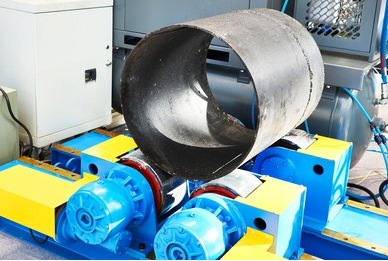
Turning rolls are essential for rotating pipes and cylindrical components during
Turning rolls are essential for rotating pipes and cylindrical components during welding, ensuring uniformity and ease of access.
Consistent, high-quality welds ensuring uniformity across all parts.
Consistent, high-quality welds ensuring uniformity across all parts.
Increased production rates, ideal for large-scale operations.
Increased production rates, ideal for large-scale operations.
Minimized scrap and rework, reducing material waste.
Minimized scrap and rework, reducing material waste.
Technical reference
Confirm the specification before ordering.
Published values are selection guidance. MISA engineering confirms load, torque, center of gravity, speed, controls, safety, and interfaces for the final proposal.
| Configuration | Confirmed against workpiece drawings and production requirements |
|---|---|
| Control | Variable-speed operation with project-specific control options |
| Power supply | Configured for destination-country requirements |
| Documentation | Final technical proposal supplied before order confirmation |
The Future of Welding Automation: What Tomorrow Looks Like
The welding industry wouldn’t have thought of the future of welding automation to be advanced 50 years before. They might have even said that it was impossible, to say the least. Fast forward to today, what could welding automation look like tomorrow? What changes can be made possible?
Welding automation will probably become integrated in routine welding processes, even in small welding shops, as welding automation technologies continue to advance and gain traction.
In this blog, we will learn and see the possibilities of automated welding in the coming years. We’ll be looking at some of the most crucial things about welding automation, such as digitization, adaptation, robotics, and many more!
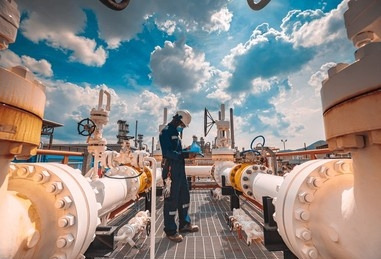
What are Automated Welding Equipment?
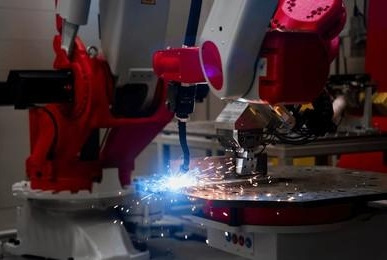
When people think of and imagine what welding automation is like, the first image that comes to mind would often be a production line filled with robotic arms tirelessly welding away.
https://youtu.be/bmFYhnPPNkg?si=hIf12OB8Rlcpcd04
However, welding automation encompasses more than just robots, even though they are often a key component in these systems, they’re not the only important things.
A range of tools created to improve the welding process' accuracy, uniformity, and efficiency are used in welding automation. To give you an idea, this includes:
-
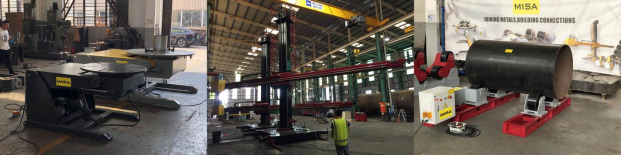
Welding positioners, which, by turning and tilting the workpiece as necessary, enable operators to quickly access and weld pieces with intricate geometries.
-
Welding manipulators are another crucial tool, enabling the precise movement of the welding head to maximize productivity and ensure high-quality welds.
-
Turning rolls are essential for rotating pipes and cylindrical components during welding, ensuring uniformity and ease of access.
Fully Automated Welding vs. Semi-Automated Welding
Yes, you read that right. Welding automation is divided into two categories: semi-automated and fully automated welding. So, how are they different and which one do you get for your business processes? Let’s take a look at each of them and try to compare them from one another.
Understanding Fully Automated Welding
In the realm of welding automation, fully automated systems are frequently regarded as the height of accuracy and efficiency, especially in sectors like the car manufacturing industry where mass output is essential.
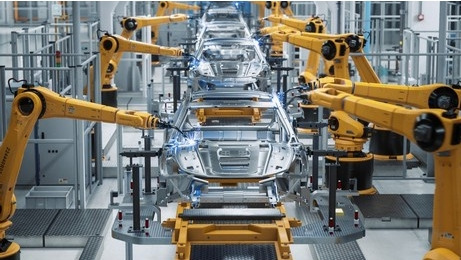
These systems are made to manage every step of the welding process, including part loading and unloading, fixture control, welding execution, and quality control inspection of the finished product.
Fully automated welding guarantees consistent outcomes with little human intervention; it is usually used in large-scale operations where repeated activities are frequent.
A Look Inside Semi-Automated Welding
On the other hand, semi-automated welding finds a middle ground between automation and the requirement for human operators with the necessary skills. Even while these technologies need less human labor, they still need operators to monitor and direct the process—ideally skilled welders
Compared to fully automated systems, this method is cheaper and more inexpensive, and is therefore more flexible, which makes it a desirable choice for small and medium-sized enterprises.
Additionally, semi-automated welding is more flexible and versatile. This is crucial for projects and shops that have a library of work and needed results. Because of this, these systems can increase production without requiring a large amount of space or money, unlike fully automated systems.
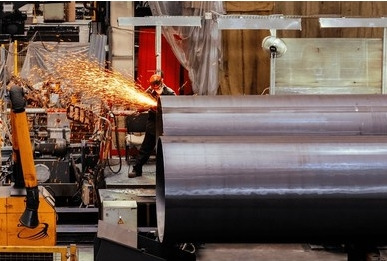
Now that we know that, let’s briefly discuss the pros and cons of automated welding.
Pros and Cons of Welding Automation
https://youtube.com/shorts/uQvBRifJMYo?si=UF8xKpAO8ULxH70Z
Yes, you read it right. Just because we’re talking about the future doesn’t mean it always ends up on all green lights. Like anything else, welding automation has its fair share of pros and cons, too.
Advantages of Welding Automation
-
Consistent, high-quality welds ensuring uniformity across all parts.
-
Increased production rates, ideal for large-scale operations.
-
Minimized scrap and rework, reducing material waste.
-
Simplified operator training, cutting down on time and resources needed compared to manual welding.
-
Improved workplace safety due to reduced human involvement in hazardous tasks.
-
Reduced post-welding cleanup as automated systems typically produce cleaner welds.
Disadvantages of Welding Automation
-
High upfront costs, though rental and lease options are available.
-
Requires skilled technicians for programming and maintenance, adding complexity.
-
Lack of flexibility for smaller operations or varied projects.
-
Potential workforce resistance, with concerns about job displacement due to automation.
NOTE: As you can see, it’s not all rainbows and butterflies. There are certain cons related to the future of automated welding, too.
Digitalization's Place in Traditional Welding
The welding industry has changed as a result of digitalization. From seeing improved efficiency, accuracy to blended new and old methods. Welders may now simulate and prepare complicated welding processes before they are executed.
So, there’ll be a waterfall of decreased errors and the no need for rework at all. This is made possible by modern software and digital instruments, changing the game and has improving the overall quality of welds.
Let’s tackle that a little bit more, shall we?
Enhanced Workflow and Efficiency through Digital Tools
One of the key benefits of digitalization in welding is the ability to streamline workflows. Automated systems can optimize processes by providing real-time feedback on weld parameters, ensuring greater consistency and minimizing waste.
Welders can now monitor their work remotely, allowing adjustments to be made on the fly, which drastically reduces downtime. This results in faster turnaround times, especially in large-scale production environments, where every minute saved translates into higher productivity and reduced operational costs.
Enhanced Project Results and Economic Viability
Digitalization has led to more productive welding procedures, which has significantly increased projects' total cost-effectiveness. Precise planning made possible using digital technologies results in fewer errors and improved material use.
Less rework and delays result from this, which eventually saves money. Furthermore, stronger, more dependable welds are produced by digital technology’s increased accuracy, which improves the performance and lifespan of welded structures.
Businesses can maintain an advantage in a cutthroat market by incorporating digital tools into welding with ease and delivering quality and efficiency on every project.
The Future of Automated Welding
The welding industry faces a growing shortage of skilled workers, increasing the need for automation. Depending on the scale of operations, businesses may choose collaborative robots (cobots) or fully automated systems to fill this gap while ensuring efficiency and precision.
Cost remains a major challenge, but renting or leasing automation equipment provides an affordable solution. This allows companies to take on more complex projects without significant upfront investments, leading to immediate returns.
Automation offers flexibility, enabling businesses to quickly scale production and stay competitive by adapting to project demands despite workforce shortages.
Experience the Best in Welding Automation with Misa Welding Co., Ltd.
Being the best in Research & Development (R&D) in the field of welding, you can count on us fully here at Misa Welding Co., Ltd. Having a total of 50+ years of combined experience, we’ll be more than happy to provide the time that you need and you’re looking for away from manual work.
We here at Misa Welding Co., Ltd. are experts in welding rotators, welding positioners, CNC flame plasma cutting machines, and many more! If you want to know more about what we have to offer, contact us!
We have an experienced team ready to provide and to assist you with the automation that you need! Get a free estimate from us, too!
Frequently asked questions
Questions to resolve before quotation.
How should this the future of welding automation in manufacturing guidance be used?
Use it to prepare technical questions and compare options, then confirm the final configuration against your drawings, workpiece data, process, and production goals.
Which project details affect equipment selection most?
Weight, dimensions, center of gravity, weld joint, process, rotation speed, duty cycle, handling method, utilities, and workshop layout are the main inputs.
Can MISA review a project before quotation?
Yes. Send the workpiece drawing and production requirements so the engineering team can recommend a practical automation route.
Start with your workpiece
Send the drawing, load, process, and production goal.
MISA engineering will review the application and recommend a practical automation route without changing the core requirement.